My CBeebies Garden
Interactive Web Experience
A child-centred interactive experience for the BBC CBeebies website, putting young children in control of their own virtual growing space. Rooted in Early Years pedagogy, the design placed learning through play, active exploration and guided discovery at its core.
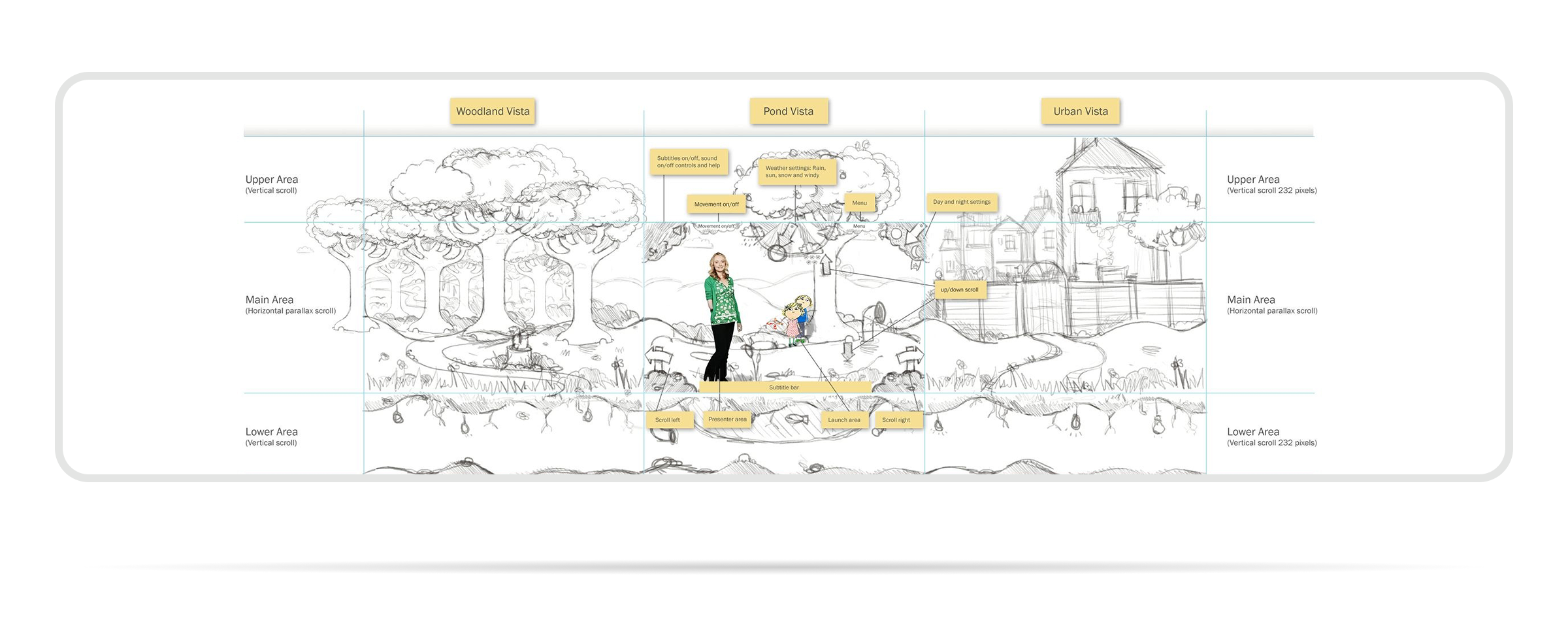
Designing for Play
The experience was structured around free-choice exploration within a defined, enabling environment. Children could plant, grow and tend their garden at their own pace, with no fail states and no time pressure. Each interaction was designed to reward curiosity and build confidence through doing.
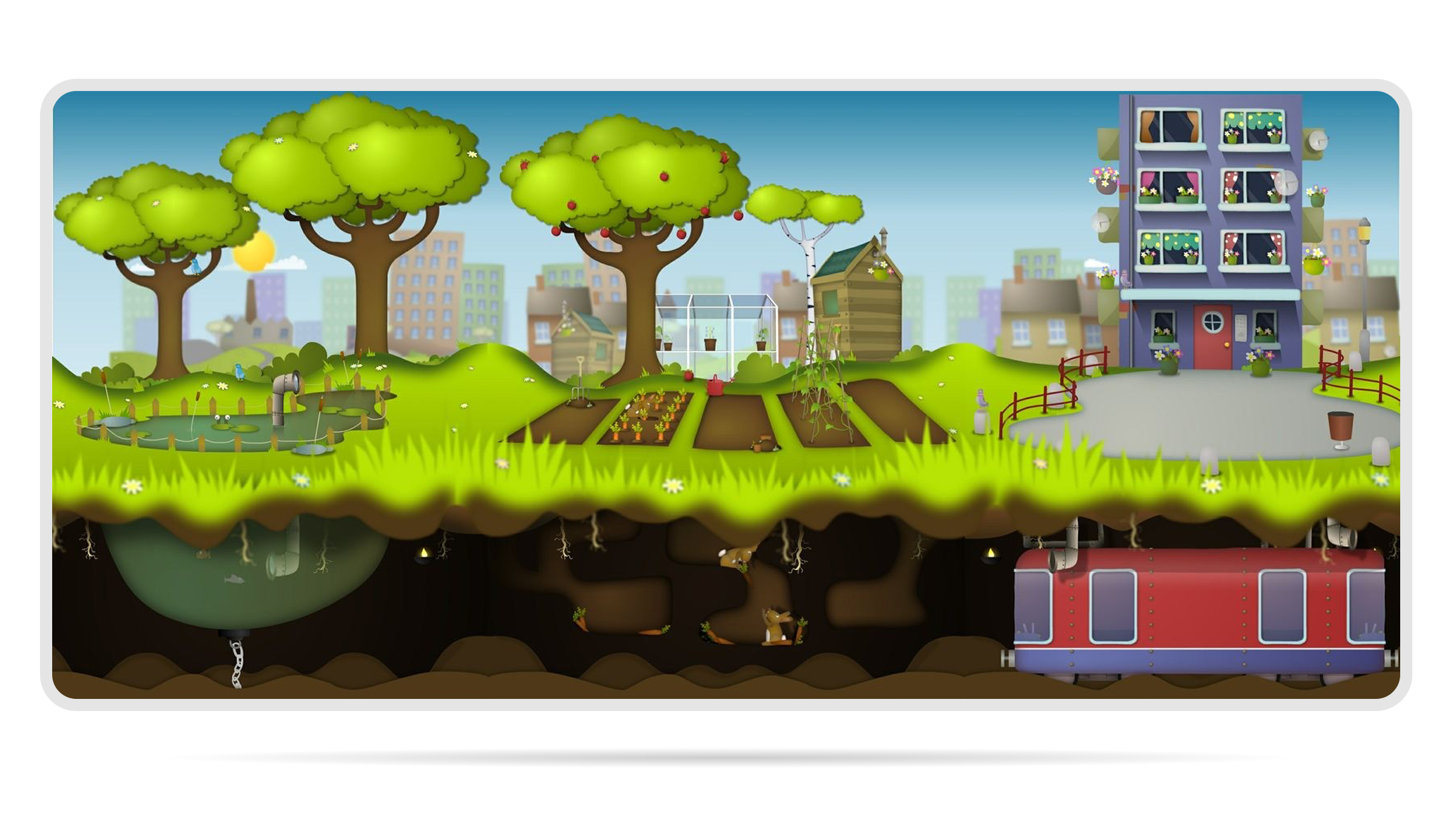
Scaffolded Interactions
Rather than directing children through prescriptive steps, the design used visual cues, character encouragement and progressive disclosure to guide them through more complex tasks. This scaffolded approach allowed children of different abilities to access the experience without becoming overwhelmed or disengaged.
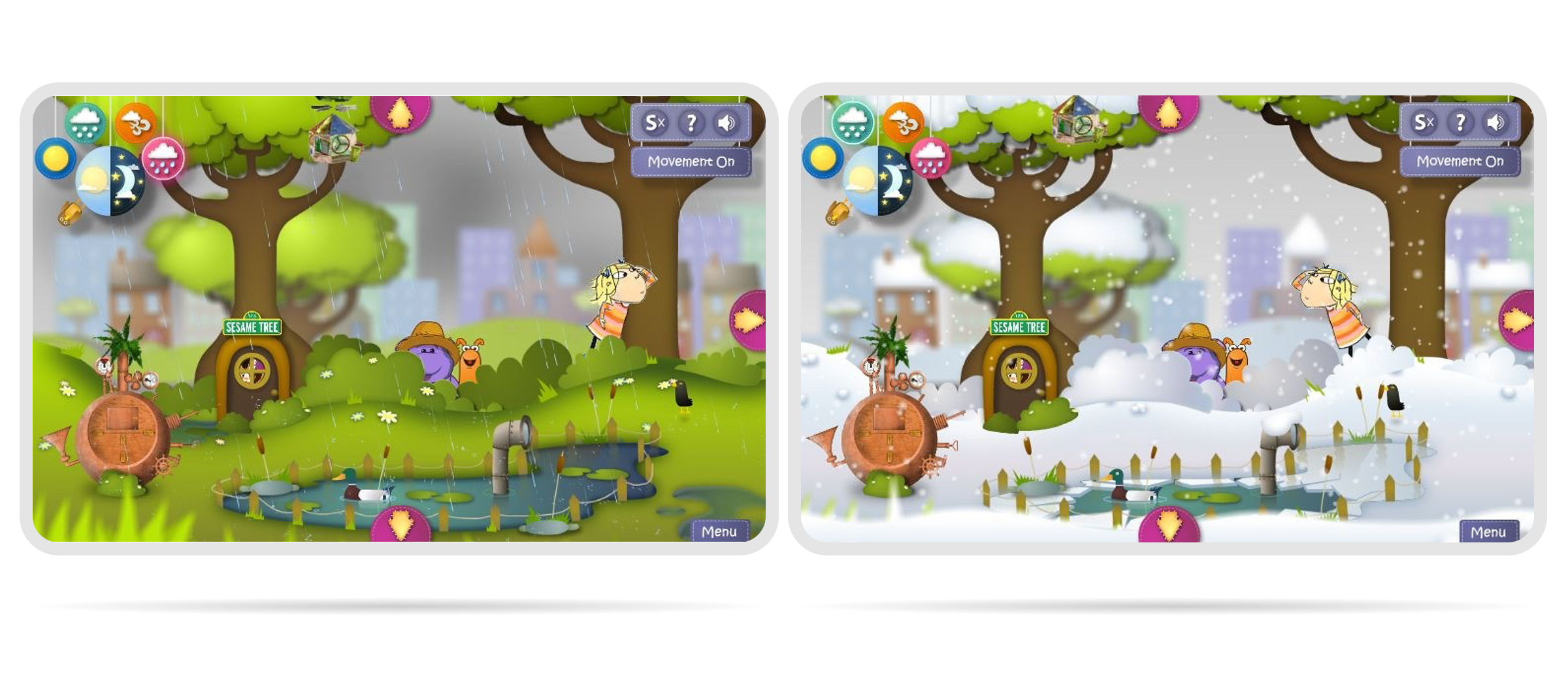
The Garden World
The main hub placed children in a richly detailed outdoor environment they could navigate freely using directional controls. Weather conditions, day and night cycling, and seasonal changes kept the world feeling alive, giving children new things to discover on every return visit and building the emotional investment needed for long-term adoption.
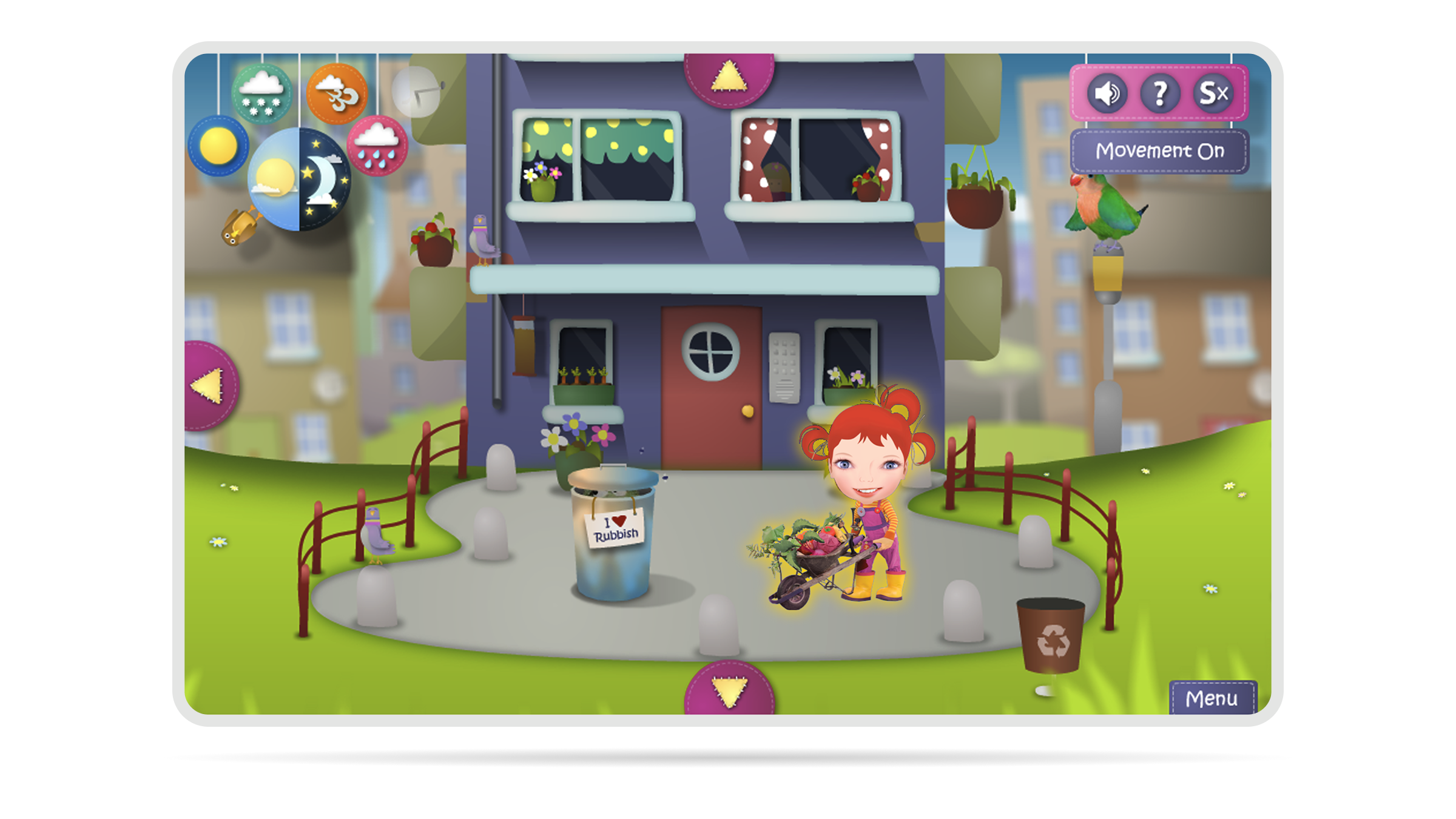
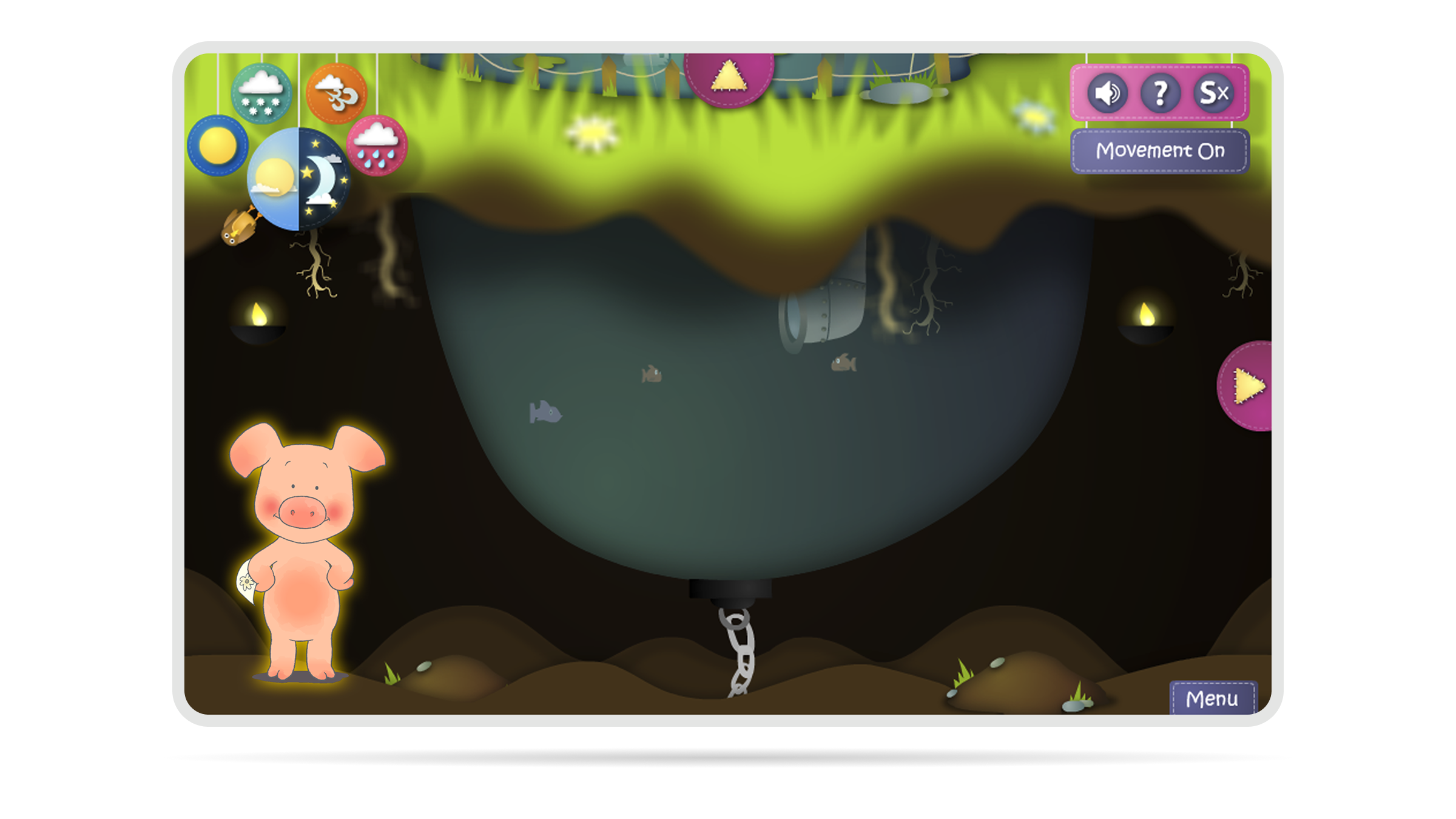
Below the Surface
An underground zone introduced cross-curricular learning by connecting the act of planting above ground with what happens beneath the soil. Children could explore root systems, encounter underground creatures and discover habitats they could not see from the surface, extending curiosity beyond the visible and introducing early science concepts through play.
Early Years Design Principles
Three Early Years pedagogical principles shaped every design decision, ensuring the experience supported how young children actually learn rather than how adults assume they do.
Active Learning
Children drive the experience. Every screen invites action rather than passive consumption, keeping attention high and building intrinsic motivation to return.
Enabling Environment
The garden provided clear zones and defined areas for exploration, giving children a sense of ownership and safety without restricting where curiosity could take them.
Self-Selection
Children chose what to plant, where to place it, and when to return. This autonomy was key to long-term adoption and emotional investment in the experience.