Global Closet Calculator
An educational interactive for National Geographic that puts students in the role of global manufacturer, exploring the environmental, economic and human rights consequences of where and how goods are made.
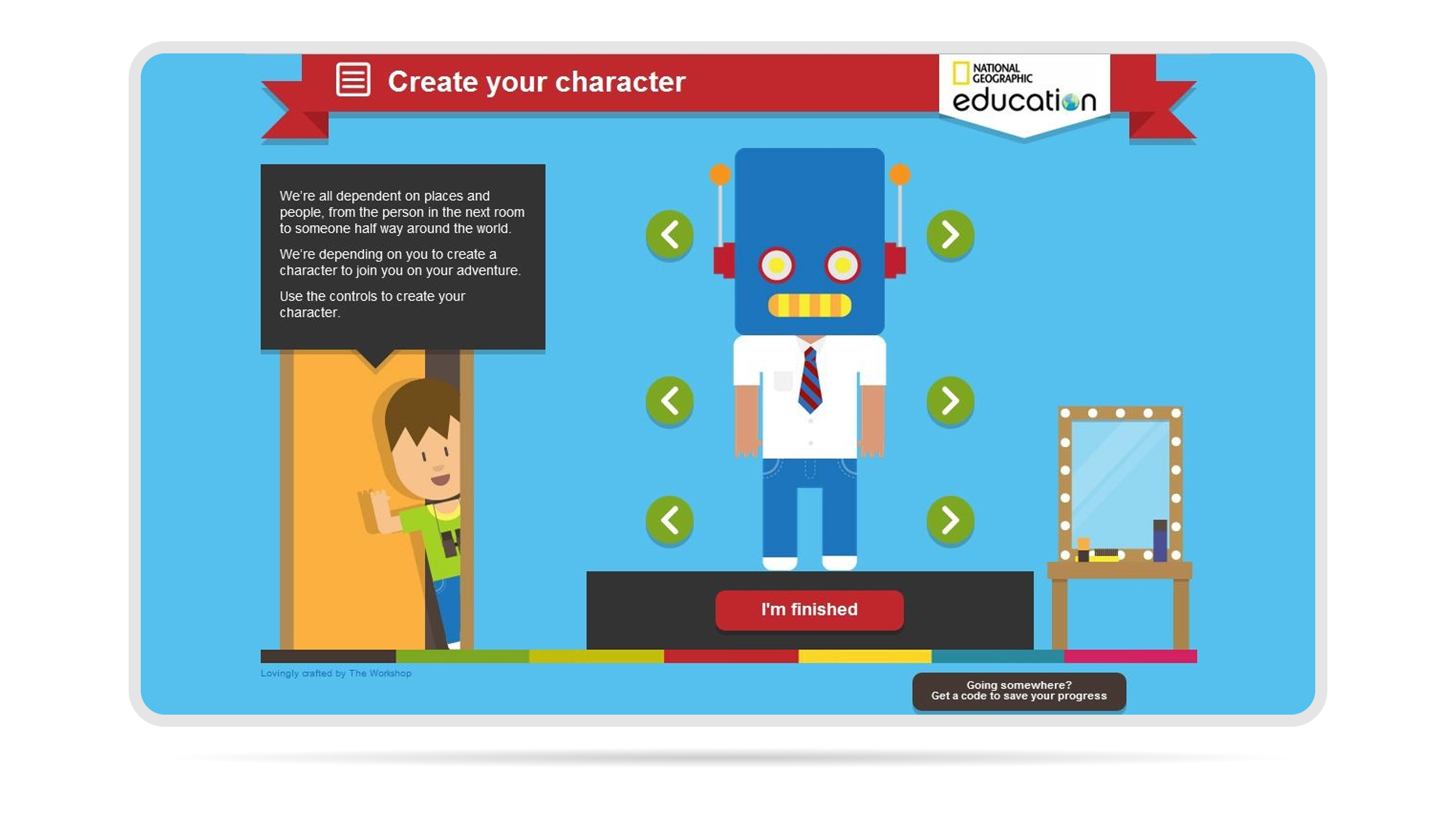
Students enter items from their own wardrobes to map where their clothes were made, or where and how an MP3 player is made, then use that knowledge to make complex decisions about manufacturing their own product.
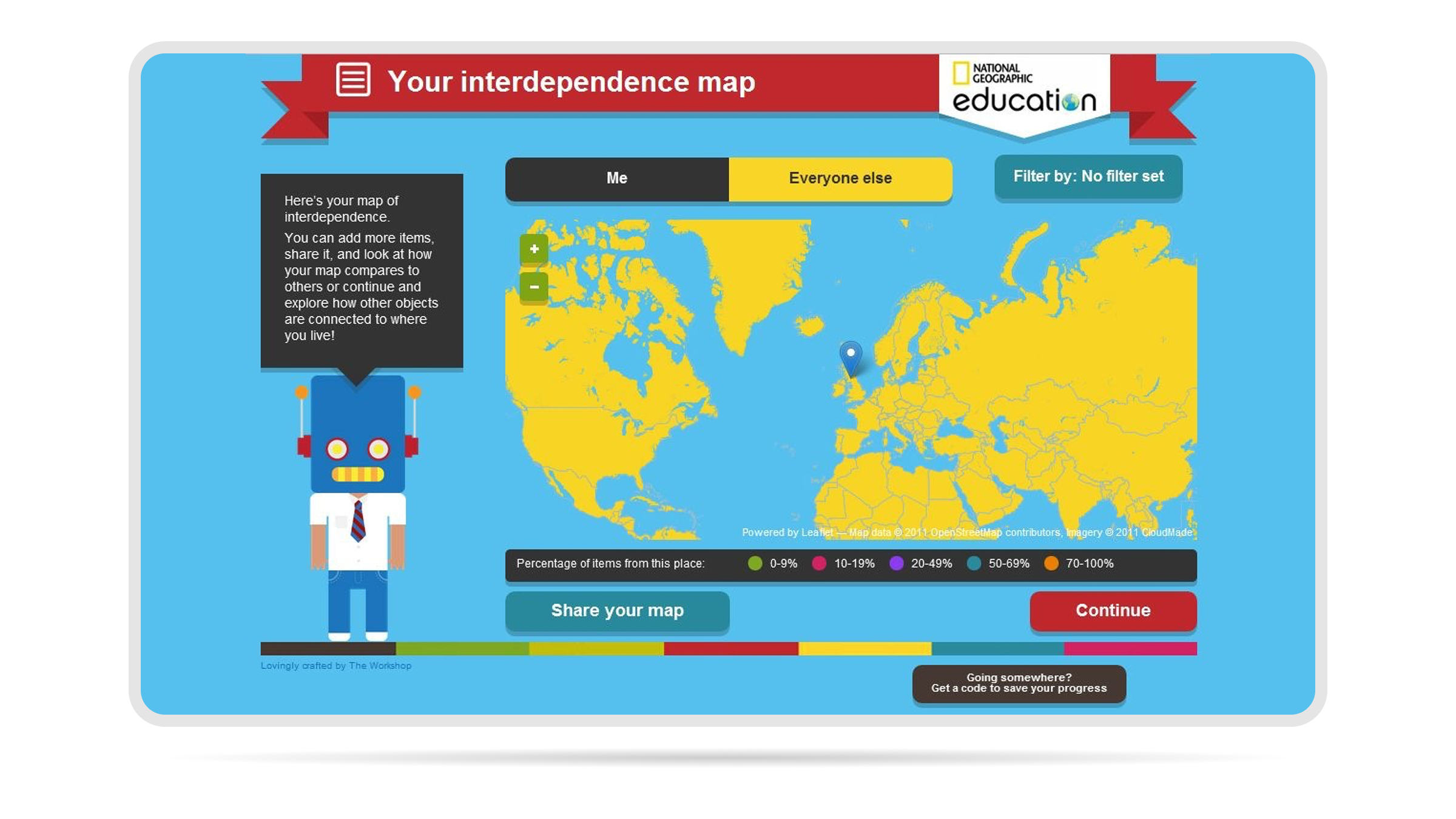
Students log clothing items and their country of manufacture, which are then plotted onto a personal interdependence map and compared against data from all other players worldwide.
A live map visualises the global flow of goods, allowing students to compare their personal data against the collective picture of where clothing is made around the world.
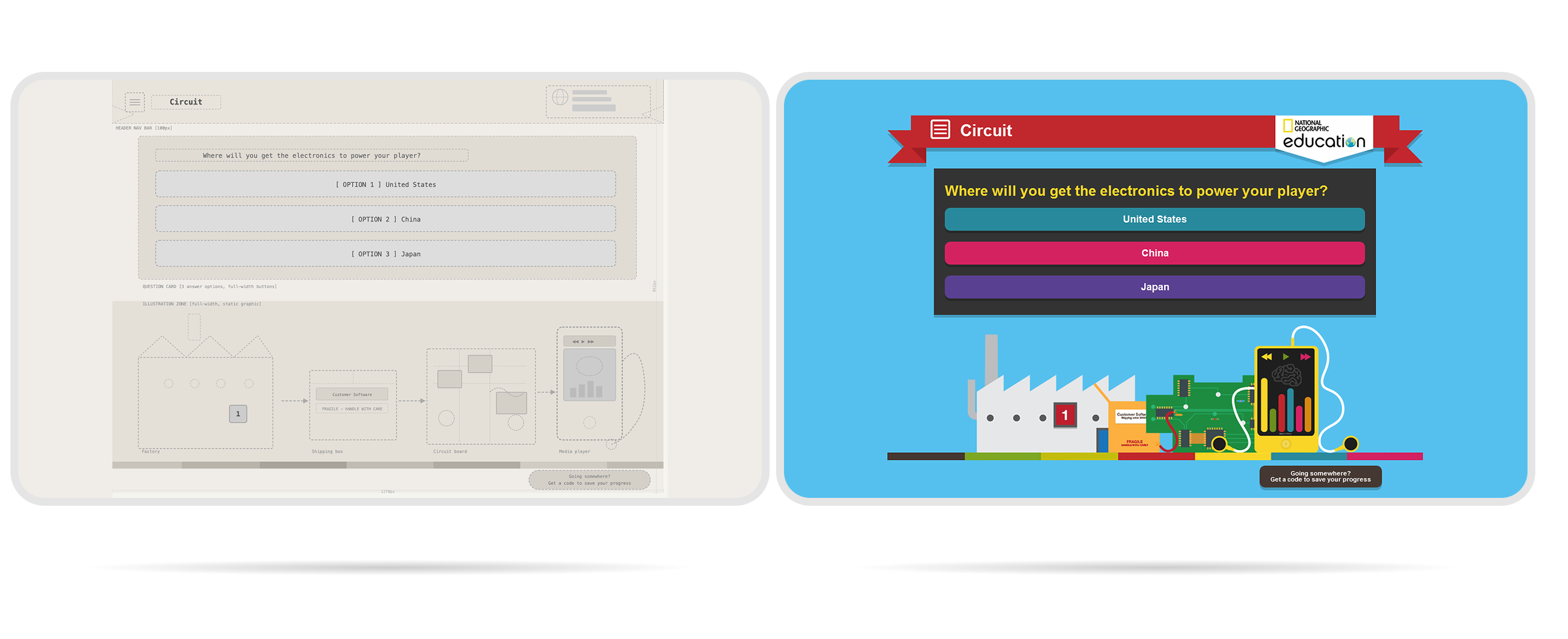
Students watch a short film on how jeans or an MP3 player are manufactured, then use what they have learned to make a series of decisions about sourcing, workforce, and environmental impact.
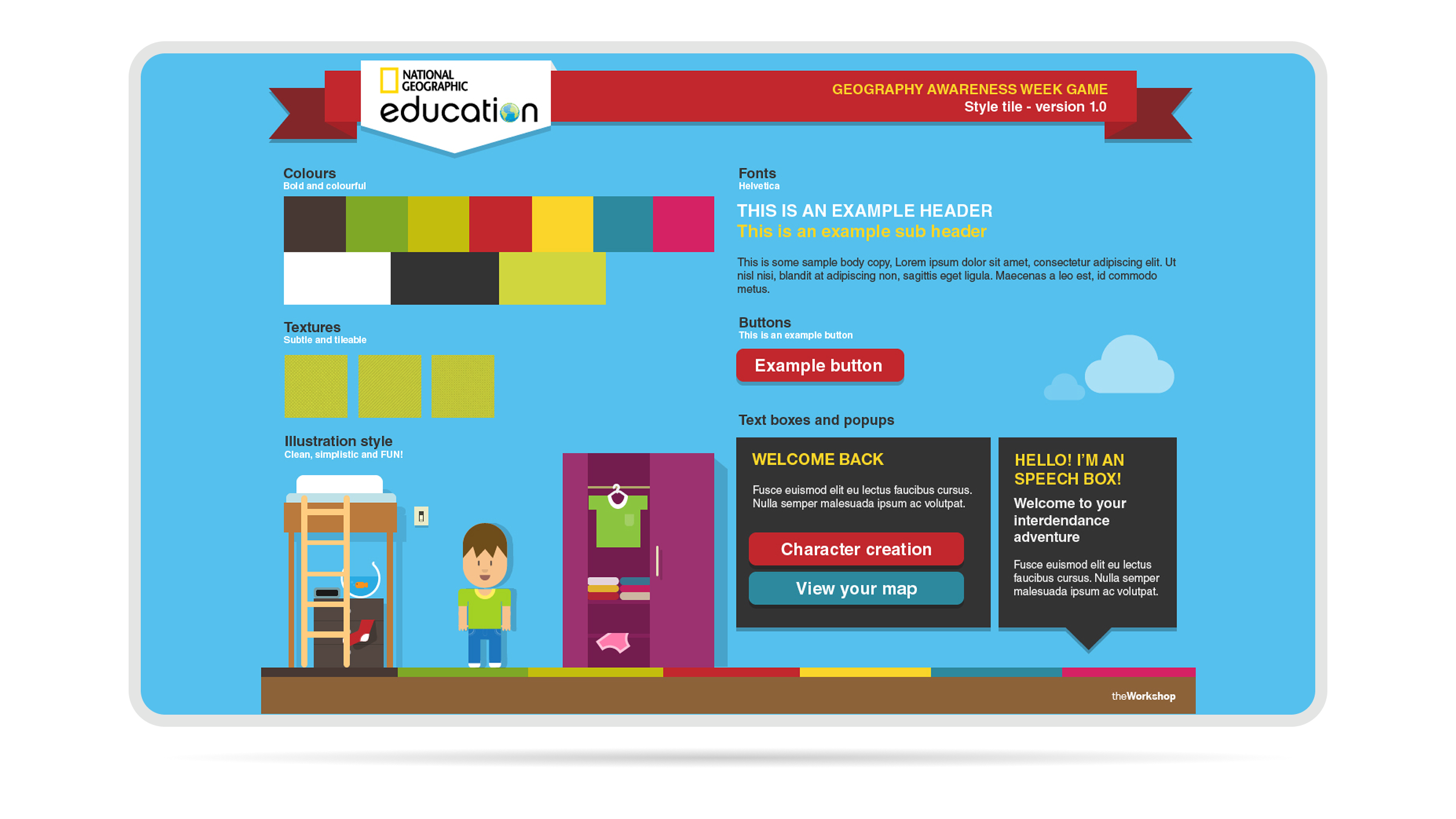
A component-based design system built to support the interactive, ensuring visual consistency across all states, screens and age-appropriate content throughout the experience.
Students select items from their wardrobe across tops, bottoms, shoes and other categories, tagging each with its country of manufacture to build their personal interdependence map.
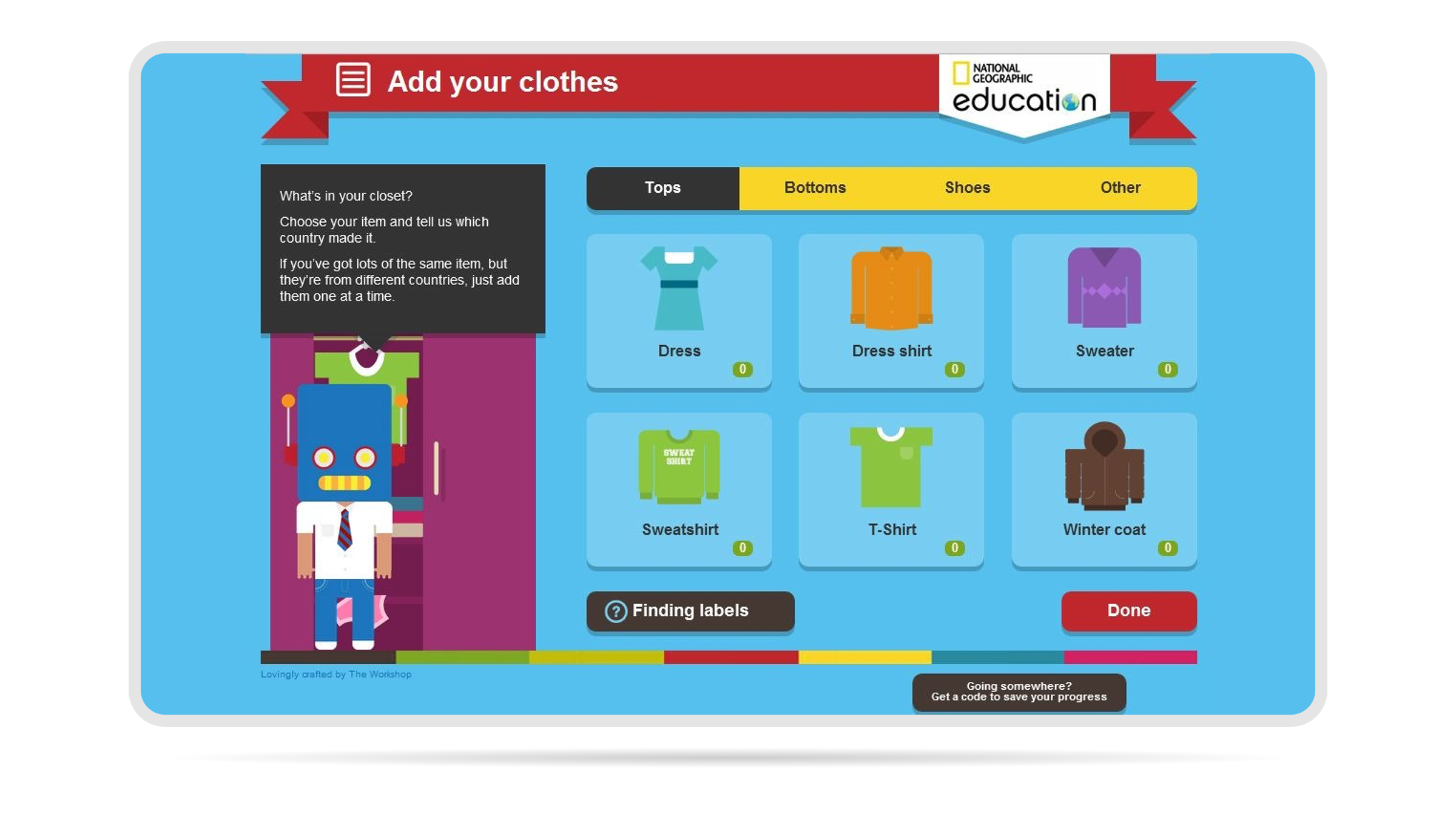
The Global Closet Calculator is an educational interactive for National Geographic that explores global interdependence through the lens of the clothes we wear. Students start by logging items from their own wardrobes and seeing where those items were manufactured, plotted on a personal map. They then compare their map to the collective data from all other players worldwide, revealing the global nature of everyday clothing production.
The second half of the interactive puts students in the role of manufacturer. After watching a short film about how jeans or an MP3 player are made, they work through a series of decisions covering where to locate a factory, how to source materials, what workforce to hire, and how to balance cost against environmental and human rights considerations.
The interactive was designed to meet four core learning objectives: identifying where clothing items originate; using maps to visualise the global flow of goods; acquiring and analysing information about the environmental, economic and societal impacts of manufacturing; and practising complex decision-making in a low-risk environment.
Rather than passively absorbing information, students must apply knowledge, explore possible outcomes and think critically to progress. The decision-making framework was designed to surface genuine trade-offs: paying workers a living wage is more ethical but raises the price of goods; using organic cotton reduces chemical pollution but also increases cost. There are no obviously correct answers.
The primary design challenge was making genuinely complex economic and ethical subject matter engaging and accessible to students across a wide age range, from primary through to secondary level. The interactive needed to work independently in a classroom setting, at home, or in an afterschool programme, without requiring a facilitator to be present for the learning to land.
The character creation and wardrobe-entry flow were designed to give students immediate personal investment in the subject before introducing the broader global picture. The badge system provided a meaningful feedback mechanism that reflected the values behind each decision without reducing the complexity to a simple right/wrong binary.